
The line 811 will not mark
The sewer lateral from a building to the main is almost always the owner's line. Septic tanks and drainfields always are. 811 does not mark either one, and they rarely show up on a survey.
So the question comes up at the worst time. A pool, an addition or a driveway is about to cross the yard, or a plumber needs to dig for a repair, and nobody knows where the line runs.
GroundScout finds the route from the surface and marks it before anyone digs.
What sewer and septic tracing involves
These are hard lines to find. Clay and PVC laterals carry no signal for a standard locator to follow.
The trace starts with the surface clues. Cleanouts, vents and tank lids show where a line starts and ends. Ground penetrating radar then scans the route between those points and the tank area.
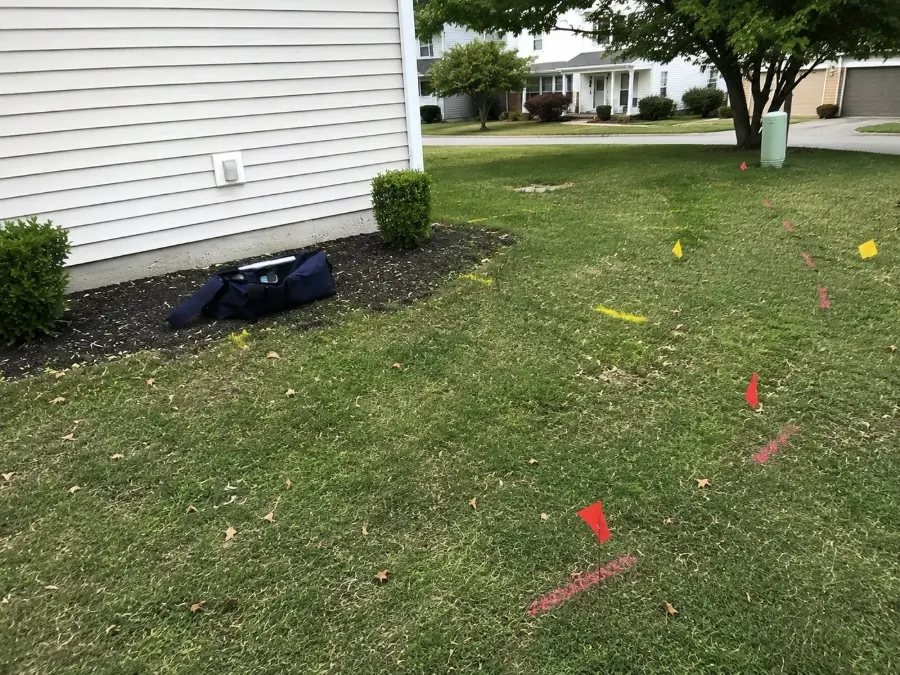
EM locating follows cast iron pipe and tracer wire where they exist. The route is marked in green paint and flags to the APWA color code, with depth estimates where the signal supports them.
GroundScout does not repair or inspect the line. Your plumber or contractor gets a marked route and digs in the right place.
What sewer and septic tracing costs
Half day: $600
EM and GPR sweep, green paint and flags, and a photo-documented field sketch. Most residential yards fit here.
Full day: $1,100
The same work for large lots, long laterals or commercial sites.
Maps and CAD: quoted
Drafted utility maps and CAD files are priced with the job.
You get a flat quote before the visit, not an hourly bill. Tell us what you know about the cleanouts, vents and tank lids when you call. That helps the trace go faster.
Why GroundScout for sewer and septic lines
- Radar and EM on every job. Radar for clay and PVC. EM for cast iron and tracer wire.
- The rest of the dig area too. The same visit can mark irrigation, power and gas where you plan to dig. See private utility locating.
- Straight about limits. GroundScout marks where a trace stopped, so nobody assumes the line ends there.
- Trained, not just equipped. GroundScout's locator holds a Certificate of Locating Competency from Staking University.
- Fast. Same-week scheduling is typical and next-day happens often.
How a sewer or septic trace works, step by step
Call 811 first
It is free and it is the law in Florida. The utilities mark the lines they own.
Tell us what you know
Share the address, the dig area and where the cleanouts, vents or tank lids are.
Get a flat quote
You get a half-day or full-day price and a date. Same-week scheduling is typical.
Find the surface clues
Cleanouts, vents and lids show where the line starts and ends.
Trace and scan
GPR scans the route and the tank area. EM follows cast iron pipe and tracer wire.
Mark the route
Green paint and flags go down. A photo-documented field sketch follows the same week.
When to trace a sewer or septic line
- Before a pool, addition, driveway or fence goes in
- Before a plumber digs for a lateral repair or replacement
- When buying a property with septic and no record of the layout
- Before heavy equipment or deliveries cross the yard
- When a commercial site needs its private sewer and storm lines on a map
See how a trace fits your trade: plumbers, pool builders and general and site contractors.
What affects the result
Soil matters most. Deep lines, wet ground and roots can weaken a radar read, and plastic pipe with no tracer wire gives EM nothing to follow.
GroundScout explains those limits on site and marks where the trace stopped, so nobody assumes the line ends there.
What helps before the visit
- Find the cleanouts and tank lids you know about. Uncover them if you can.
- Mark where the pool, addition or trench will go.
- Unlock gates so the whole route can be walked.
- Share any septic drawing or survey you have.
Sewer and septic tracing FAQs
Does 811 mark my sewer line?
No. The sewer lateral from a building to the main is almost always the owner's line, and septic systems always are. 811 does not mark either one.
Can you find a septic tank?
Often. GPR can pick up the tank and lines in the right soil. Depth, soil and surface conditions all affect the result.
Can you trace plastic or clay sewer pipe?
Often. PVC and clay carry no signal on their own, so the trace relies on GPR from the surface, plus tracer wire where the installer left one.
How much does sewer or septic line tracing cost?
A half day is $600 and a full day is $1,100. Most residential yards fit in a half day. You get a flat quote before the visit.
Do you repair or inspect the line?
No. GroundScout locates and marks the route so your plumber or contractor can dig in the right place.
How fast can you come out?
Same-week scheduling is typical and next-day happens often.
Service areas
GroundScout works across Hillsborough, Pinellas, Pasco, Polk, Manatee and Sarasota counties and the Orlando area. Local pages: Tampa, St. Petersburg, Clearwater, Largo, Palm Harbor, Brandon, Riverview, Plant City, Lutz, Wesley Chapel, Land O' Lakes, New Port Richey, Lakeland, Winter Haven, Bradenton, Lakewood Ranch, Sarasota, Venice and North Port.