
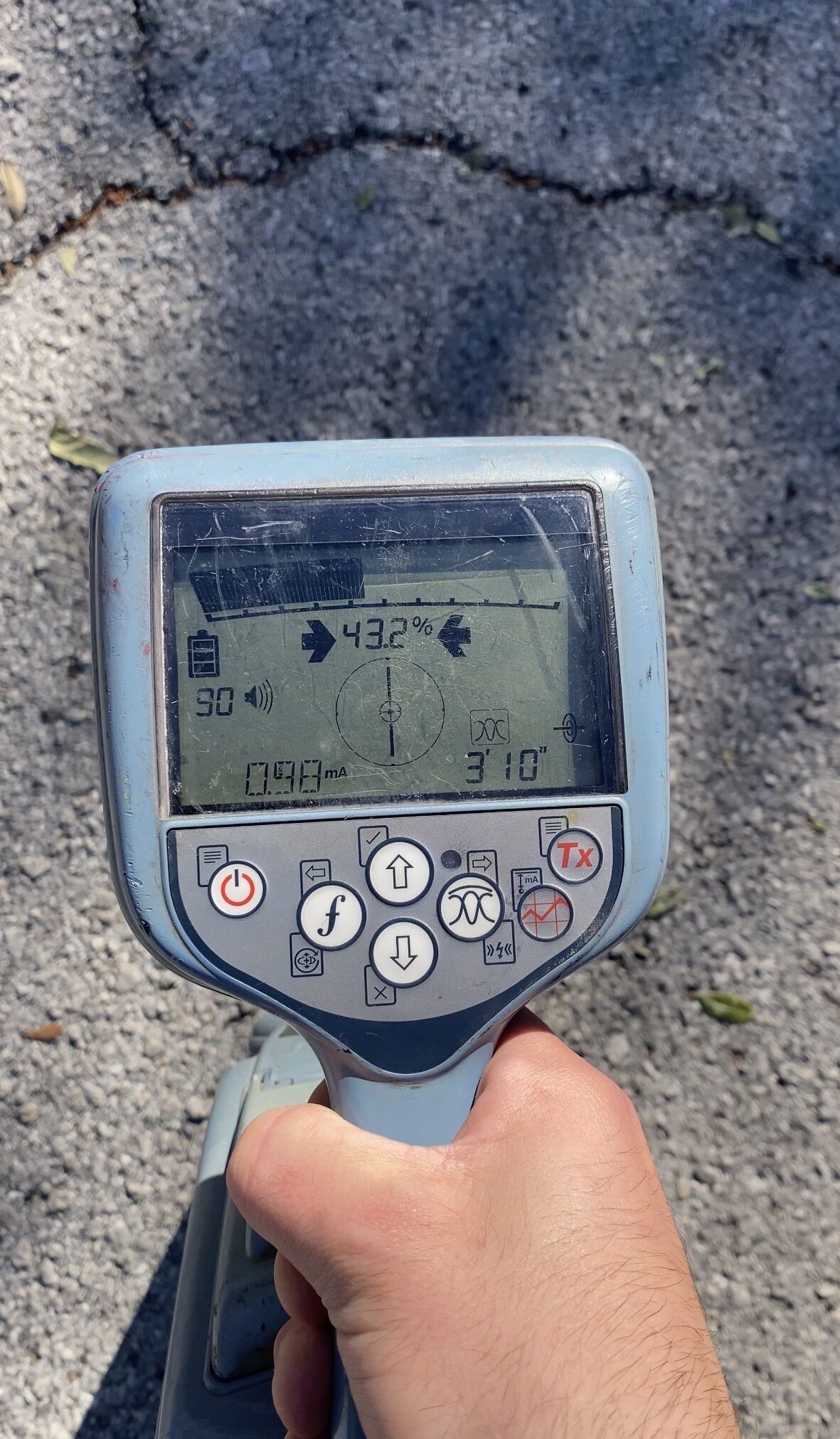
Understanding subsurface utility depths helps you prevent costly strikes, stay safe, and plan with confidence.
When planning any excavation project — from fence posts and irrigation installs to pool construction and commercial building — one of the most common questions homeowners and contractors ask is:
How deep are underground utilities buried?
The honest answer? There’s no single depth that applies everywhere. In Tampa and throughout Florida, utility depths vary by utility type, local code, soil conditions, and when the infrastructure was installed. That’s why professional utility locating — not guesswork — is essential.
Typical Utility Depths: What to Expect
Different utilities are installed at different depths depending on function, safety requirements, and local regulations. Below are general guidelines you might see in the field around Tampa, Florida:
⚠️ Important: These are estimated ranges — they’re not guaranteed safe digging depths.
Why Depth Varies So Much in Florida
Tampa and the surrounding Florida region are geologically unique:
Sandy Soils
Sandy subsoils provide less natural cover, causing utilities to be buried deeper to prevent disturbance.
High Groundwater
Areas with high water tables may require deeper utility placement to reduce exposure to hydrostatic forces.
Older Neighborhoods
Utilities installed decades ago may not follow modern standards or updated drawings.
Private vs Public Utilities
Public utilities may follow minimum standard depths — but private lines on your property often don’t have standardized depths, especially for irrigation, electric feeds, or builder-installed infrastructure.
Why You Can’t Rely on Depth Estimates Alone
Even if you know typical depths, buried utilities don’t always adhere to the numbers above.
Here’s why:
Utilities can be shallower than minimum code depth due to soil shifts, erosion, or human error
Some utilities are installed deeper than required to avoid interference or future disturbance
Older lines may have been abandoned in place and left undocumented
Multiple utilities can cross each other at different depths
That means a pipe at “expected depth” might be above or below that line on your actual property.
This is exactly why GroundScout recommends professional locating and mapping before digging — depth estimates alone are not a safe substitute.
How Professional Locating Works
Professional utility locators use multiple technologies to determine both horizontal location and approximate depth of buried utilities:
Electromagnetic (EM) Locating
EM tools trace conductive utilities like metallic pipes and cables and can provide a depth estimate based on signal response.
Ground Penetrating Radar (GPR)
GPR sends radar pulses into the ground and captures reflections, revealing both metallic and non-metallic utilities along with approximate depths.
Combined Tech for Accuracy
Using both EM and GPR together gives a much clearer picture of what's below — especially on varied soil types like those found in Tampa Bay.
For more on this, see our Utility Locating Services page.
Why Knowing Utility Depth Matters
Avoid Utility Strikes
Hitting a buried line can shut down services, damage equipment, and pose serious safety risks.
Protect Workers
Unmarked, shallow utilities are one of the biggest hazards for excavation crews.
Save Money & Time
Repairing a utility strike could cost thousands of dollars and weeks of project delays.
Support Better Planning
Accurate depth data informs design, excavation strategies, and risk mitigation earlier in the project.
Do Florida Codes Require Minimum Burial Depths?
Yes — Florida administrative and local construction codes include minimum burial depth requirements for public utilities. But:
✅ Codes only apply to certain utilities
✅ They may not reflect actual depth in the field
✅ Private utilities often don’t fall under the same regulations
This means that even if codes specify a minimum depth, real-world depths may vary due to soil conditions, repairs, retrofits, and undocumented installations.
How to Protect Yourself and Your Project
Here are the key steps you should take before any digging begins in Tampa or anywhere in Florida:
1. Call 811 Before You Dig
This starts the process of marking public utilities at no cost.
2. Schedule Professional Utility Locating
Especially on private property, 811 marks may not cover everything — irrigation, electric feeds, telecom lines, and abandoned utilities can go unmarked.
3. Validate With GPR and EM Technology
Combining technologies gives you a more complete picture of both location and depth.
Frequently Asked Questions
Q: Are gas lines deeper than water lines in Tampa?
A: Not always. Gas and water line depths vary based on installation factors — sometimes gas is shallower than water, and vice versa.
Q: Can GPR detect plastic pipe?
A: Yes — GPR can often detect non-metallic pipes, but soil moisture, depth, and composition affect results.
Q: Is 811 enough for private property?
A: No. 811 marks public utilities — private lines require professional locating.