
Limitations of EM Locating
While EM locating is extremely useful, it has limitations. Some underground utilities:
Are non-metallic (PVC, clay, concrete)
Lack tracer wire
Are abandoned or undocumented
In these cases, relying on EM locating alone may not identify every subsurface feature.
How Ground Penetrating Radar (GPR) Complements EM Locating
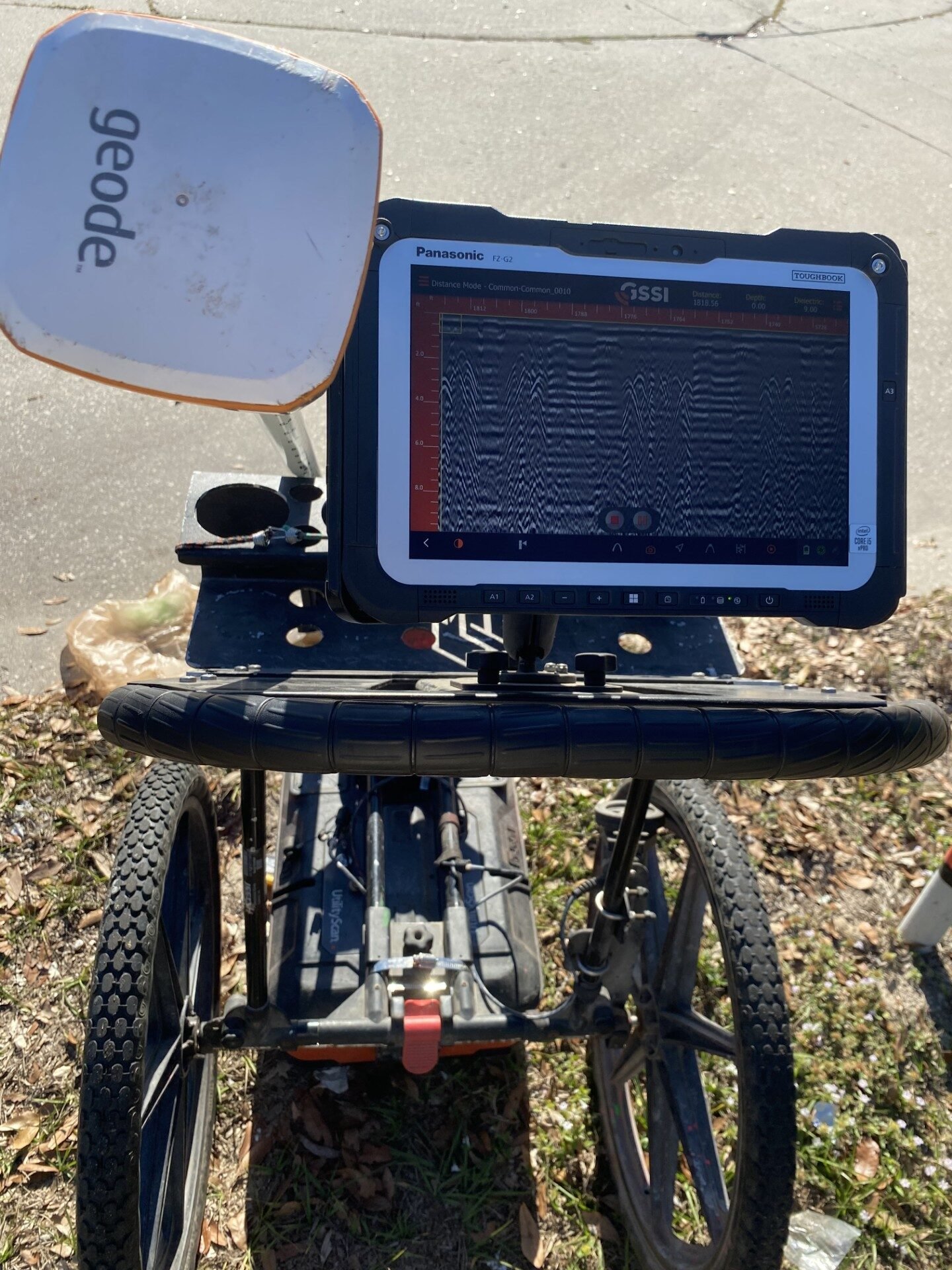
Ground penetrating radar (GPR) uses radar signals to detect changes beneath the surface, allowing locators to identify objects regardless of material type. GPR is often used alongside EM locating to confirm results or identify utilities that EM equipment cannot detect.
How Ground Penetrating Radar (GPR) Complements EM Locating
Ground penetrating radar (GPR) uses radar signals to detect changes beneath the surface, allowing locators to identify objects regardless of material type. GPR is often used alongside EM locating to confirm results or identify utilities that EM equipment cannot detect.
Reduce uncertainty
Identify non-metallic utilities
Confirm congested utility corridors
Improve overall accuracy
This layered approach helps prevent utility strikes and costly project delays.
Utility Locating on Private Property
Utilities located on private property are typically not marked by 811, making professional locating essential before digging. Using both EM and GPR methods helps ensure underground utilities are identified as completely as possible.
locating underground utilities on private property
Serving Tampa Bay with Professional Utility Locating
GroundScout provides private utility locating using EM wand equipment and GPR services throughout Tampa Bay, helping contractors and property owners dig with confidence.