
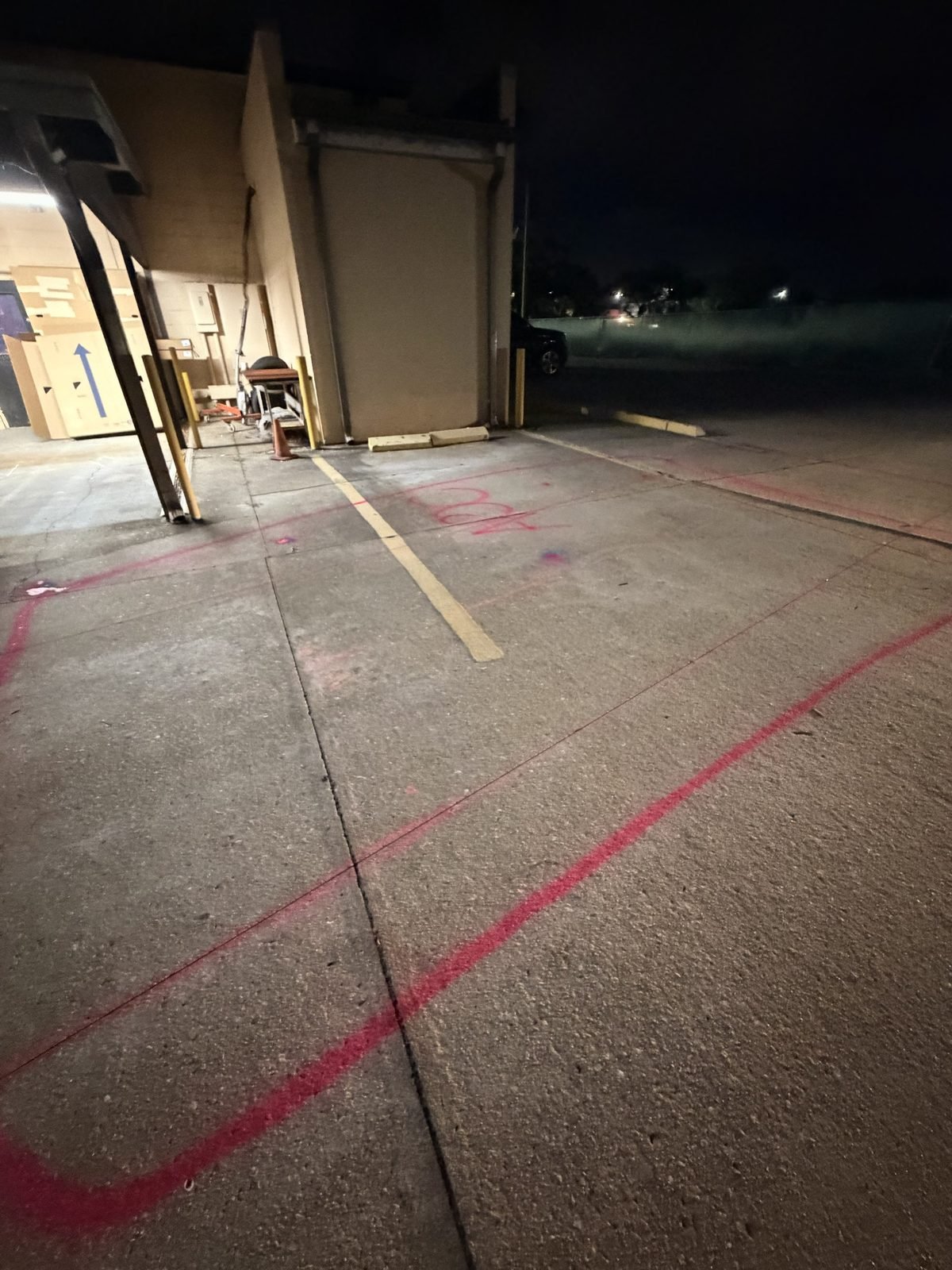
- An unknown line is live until proven otherwise.
- A sweep uses three passes: a passive scan, an induced signal and a radar grid.
- No sweep can prove a site is empty. It can only report what it found and where it looked.
Where unknown lines come from
- A building came down and its services were cut at the property line, not removed
- A tenant added a line and never told the owner
- A utility relocated its main and left the old one in the ground
- A gas station, a farm or a plant used the land before the current owner
- The drawings were lost, or were never right
Utilities mark the lines they still operate. A utility may not mark a line it retired decades ago. Private lines were never in the system at all.
How a clearance sweep works
Passive scan
Live power cables and some metal pipes give off a field with nothing connected. A receiver walked across the site in a grid picks those up first.
Induced signal
A transmitter set on the ground puts a signal on any metal line below it. Moving it around the site lights up pipes and cables that were quiet on the passive scan.
Radar grid
Radar passes in two directions catch what has no metal: plastic pipe, clay pipe, empty conduit and old tanks.
Each target gets paint and a note on the field sketch. Where the type is known, it gets the APWA color. Where it is not, the sketch says "unknown" and gives the depth estimate.
Dead or alive
A locator can find a line. It cannot always tell you whether the line is in service.
Treat every unknown as live. Before anyone cuts it, trace it to both ends. A pipe that runs to a capped stub at the property line is one thing. A cable that runs to a panel next door is another.
What a sweep cannot do
No one can certify that ground is empty. Radar has a depth limit, and the USDA notes that wet, clay and salty soils shorten it. A small plastic line below that limit will not show.
A sweep report says what was found, where the passes ran and what conditions limited them. Read the limits as closely as the findings.
When to order one
- Before demolition and site clearing
- Before mass grading on a previously developed lot
- During due diligence on a purchase
- Before borings, test pits or foundation work on an old site
Questions about unknown lines
Can you tell if an abandoned line is really dead?
Not from the surface with certainty. A live power cable shows on a passive scan. A water or gas line gives no such sign. Trace it to both ends before treating it as dead.
Will 811 mark abandoned utility lines?
Utilities mark the lines they operate. A retired line may get no mark. Private lines, in use or not, are never marked by 811.
How long does a sweep take?
That depends on the size of the site and the surface. GroundScout quotes by the half day or full day after seeing the dig limits.