
Whether you’re planning a landscape upgrade, installing a new fence, excavating for a pool, or breaking ground on a commercial build, understanding what lies beneath the surface can make the difference between a smooth project and an expensive, dangerous mistake.
Why Utility Locating Matters
Beneath almost every property lies a complex subsurface network of utilities — gas lines, water and sewer pipes, electric and communication cables, irrigation conduits, and more. Many of these utilities are not shown on public records, and even when they are, maps are often outdated, incomplete, or inaccurate.
Hitting a utility line during excavation can result in:
Service outages
Project delays
Costly repairs
Fines and compliance issues
Safety hazards to workers and the public
Professional utility locating minimizes these risks by giving you a clear view of what lies underground before your team begins digging.
When Should You Schedule Utility Locating?
1. Before Any Excavation or Digging
This is non-negotiable.
Before you start digging — even a few inches — arrange for utility locating. This includes:
Trenching
Footings and foundations
Pool excavations
Irrigation installs
Hardscape or fence post holes
Private utilities on a property are not always marked by 811 locators — so don’t assume clear ground means clear subsurface.
2. When 811 Marks Don’t Tell the Full Story
Calling 811 is an important first step, but public markings often only cover public utilities — and even then, gaps frequently occur.
If:
811 markings look incomplete
Lines don’t match existing plans
You’re on private or commercial property
You suspect undocumented utilities
…then professional private utility locating is recommended.
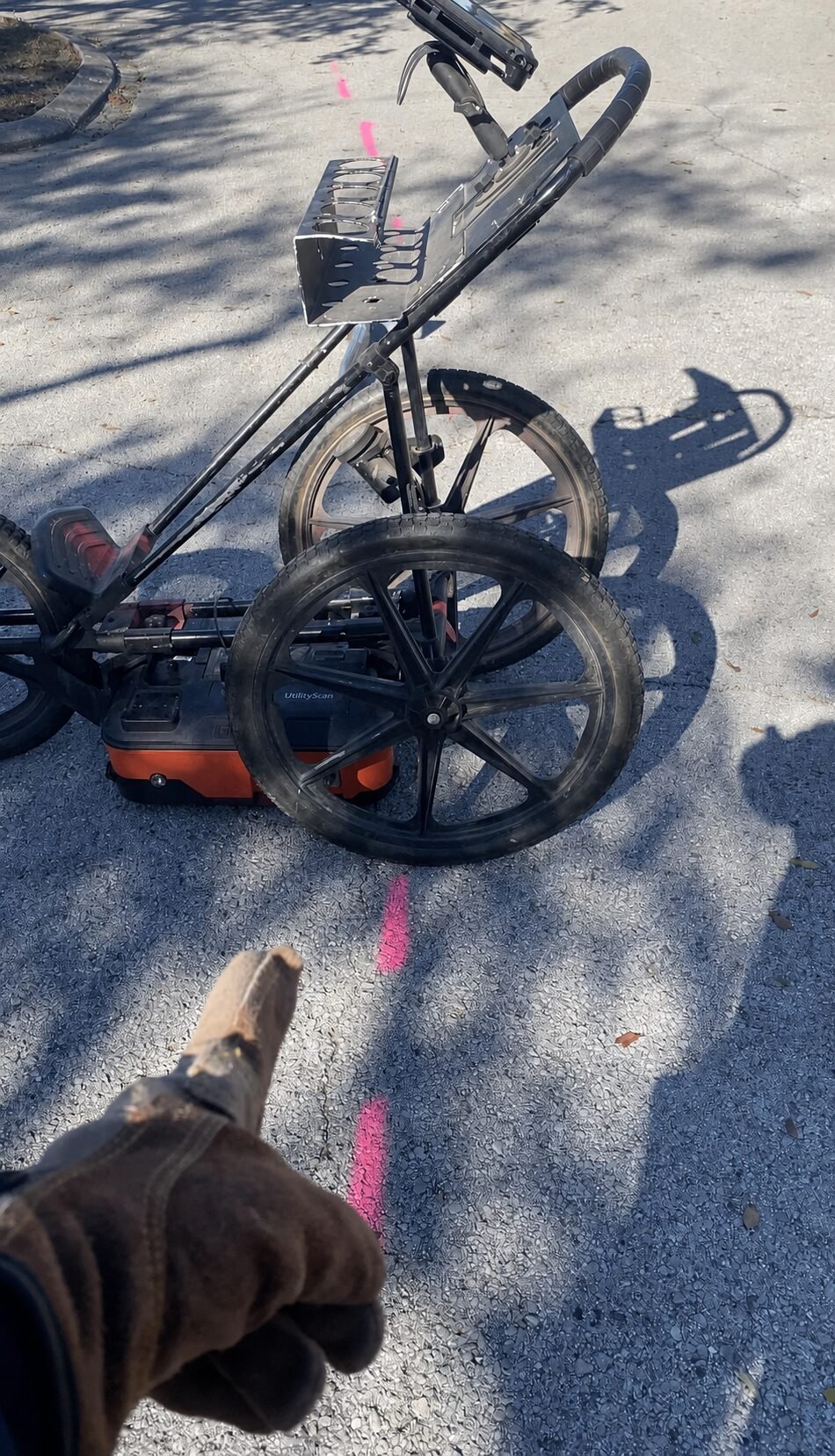
GroundScout uses both electromagnetic tools and ground penetrating radar (GPR) to locate utilities even when public records leave gaps.
3. Before Major Landscaping or Property Improvements
Many homeowners think they only need utility locating for construction — but risk isn’t limited to big builds.
Projects that benefit from locating include:
Pool excavation
Deck or patio installation
Fence and gate posts
Driveway expansion
Lighting or irrigation installs
Tree planting or stump removal near utilities
Even shallow work can intersect with buried lines. Knowing what’s below the surface protects you, your property, and your contractors.
4. During Due Diligence and Property Assessment
If you’re buying or developing property, utility locating should be part of your due diligence.
Professional utility locating supports:
Site feasibility studies
Environmental and geotechnical reports
Construction risk assessment
Budget planning and timeline development
Surprises during construction can derail budgets — locating utilities early informs smarter decisions before commitments are made.
5. When Utility Plans Don’t Match What’s On Site
It’s not uncommon for recorded plans to differ from what’s actually installed underground.
Reasons include:
As-built plans that were never updated
Old utilities abandoned but not documented
Lines installed before modern mapping standards
Private utilities not captured by public records
When field conditions don’t match plans, utility locating verifies the truth.
What Happens During a Utility Locate
Professional locating combines multiple technologies to give you the most complete picture:
Electromagnetic (EM) locating: Uses a signal transmitter and receiver to trace conductive utilities like electric, phone, and metal pipes.
Ground Penetrating Radar (GPR): Sends radar waves into the ground to detect both metallic and non-metallic utilities, voids, and subsurface features.
When used together, EM and GPR provide more reliable data than either method alone.
Benefits of Locating at the Right Time
Here’s what utility locating helps you avoid:
✔ Avoiding utility strikes and safety incidents
✔ Reducing downtime and project interruptions
✔ Improving planning and resource allocation
✔ Minimizing expensive repairs and change orders
✔ Increasing confidence before construction begins
Utility locating isn’t optional — it’s an investment in project safety, efficiency, and cost control.