
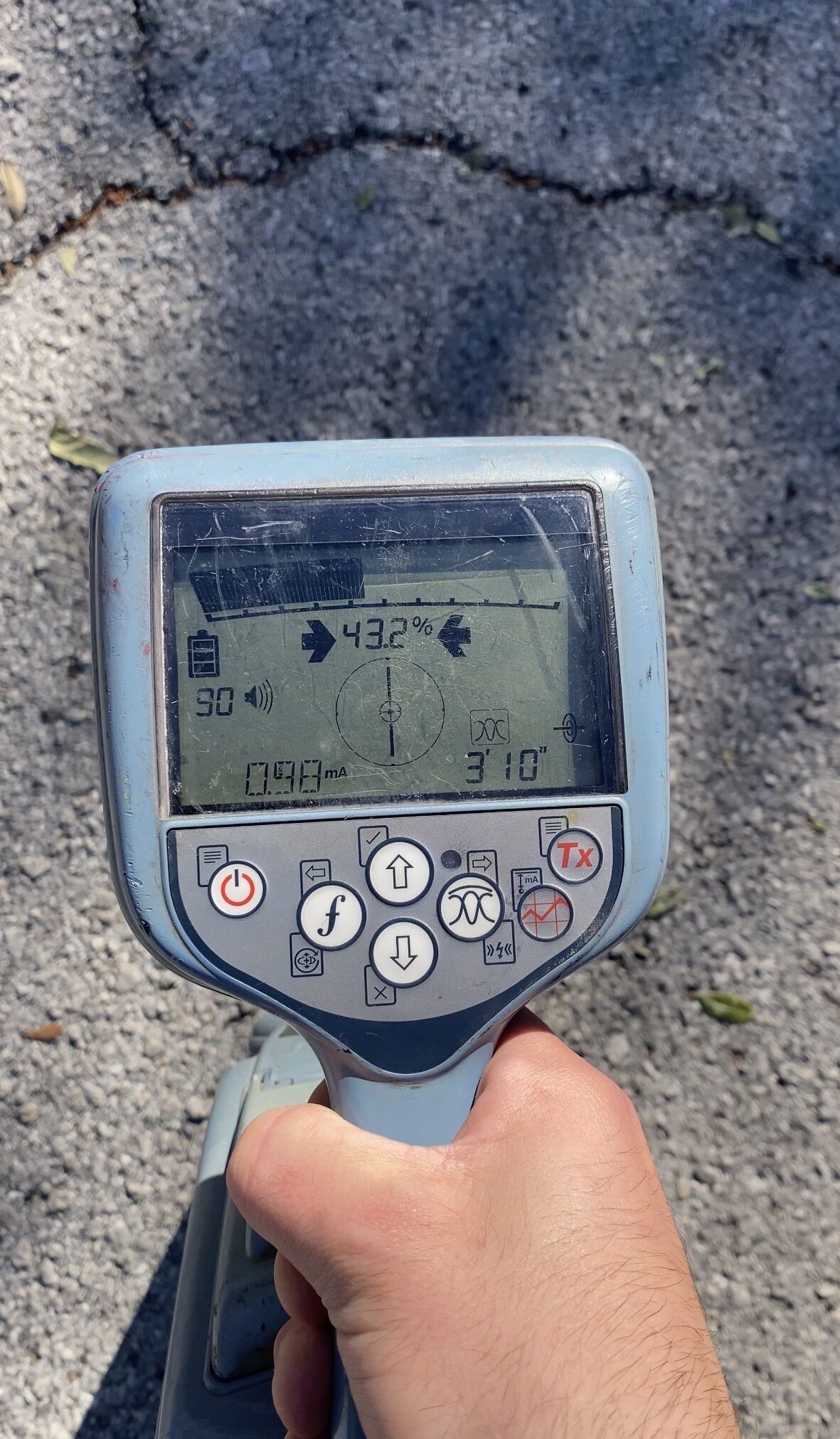
Whether you’re planning a small landscaping job or a major construction project, identifying underground utilities early can save you time, money, and serious headaches. Public utility marks alone often don’t tell the whole story — especially on private property. That’s where a private utility locating service becomes essential.
What Does a Private Utility Locator Do?
A private utility locator uses specialized equipment and expertise to find and document buried utilities on private property — including gas, water, sewer, electric, telecom, fiber optics, and irrigation lines — before any excavation or drilling begins.
At GroundScout in Tampa, Florida, our locators combine technologies like Ground Penetrating Radar (GPR) and Electromagnetic (EM) locating to provide comprehensive subsurface information with precision.
When Should You Call a Private Utility Locator?
Here are the key times you should schedule professional locating services in the Tampa Bay area:
1. Before Any Excavation or Digging
This is the most important guideline. Whether you’re digging for:
Pool installation
Fence or deck posts
Driveway or patio excavation
Trenching for utilities
…you should have underground utilities located first. Even a few inches of digging can intersect buried infrastructure.
Tip: Don’t wait until the excavation crew arrives — call before any groundwork starts.
2. When 811 Markings Are Incomplete
In Florida, as in the rest of the U.S., calling 811 is the required first step to identify public utilities. However, 811 typically only marks utilities up to the meter or connection point.
Private utilities on your property — such as irrigation lines, electrical feeds, gas laterals, or older undocumented services — may not be marked. That’s why professional private locating matters.
GroundScout Services bridge gaps where 811 doesn’t reach, especially on residential, commercial, and redevelopment sites.
3. Before Major Landscaping or Hardscape Projects
Many homeowners think utility locating is only for big construction jobs — but even small projects like landscaping, irrigation installation, or tree removal should start with locating services.
Underground hazards aren’t just deep — they can be shallow and unexpected.
4. During Property Due Diligence
If you’re buying property in Tampa, St. Petersburg, or the surrounding Florida counties, utility locating should be part of your due diligence.
Accurate subsurface information helps:
Evaluate site risks
Inform budget estimates
Support feasibility studies
Avoid surprises during construction
5. When Utility Plans Don’t Match What’s on Site
It’s common for record drawings to differ from what exists underground — especially on older properties or redeveloped parcels.
When field conditions don’t line up with plans, a locator can uncover:
Abandoned utilities
Mismatched alignments
Unrecorded conduits
This is especially valuable for engineers and design teams.
Private Utility Locating vs. Public Utility Marking
Public utility marking — like 811 service — is free and mandatory. However, it does not cover private property utilities or provide precise mapping.
Professional private locating:
Provides accurate horizontal positions
Detects utilities not shown on records
Uses advanced tools like GPR scanning
Generates documentation you can use for planning and permitting
For more depth on this difference, see our service page on Private Utility Locating.
The Technologies Behind Locating
Private locators use multiple technologies to paint a full picture of what lies beneath:
Electromagnetic (EM) Locating
EM locating detects conductive utilities — like metal pipes and cables — by transmitting a signal and tracing the response. It’s ideal for electric, telecom, and metallic water lines.
Learn more about this process on our EM Locating Services page.
Ground Penetrating Radar (GPR)
GPR transmits radar pulses underground and visualizes reflections from utilities and anomalies. It can detect non-metallic objects like PVC pipe, concrete, and voids that EM might miss.
See our GPR utility locating Services for examples and benefits.
Benefits of Calling a Locator Early
Getting locating done before work begins offers clear advantages:
✔ Reduces risk of utility strikes
✔ Protects your team and jobsite safety
✔ Prevents service disruptions and fines
✔ Improves planning and coordination
✔ Supports confidence in project decisions
In Tampa and throughout Florida, these benefits translate into smoother construction, fewer delays, and lower overall risk.
How to Prepare for a Locating Visit
Before your locator arrives:
Ensure 811 has been contacted
Provide property ownership and any utility records
Mark known obstacles or planned dig areas
The more information your locator has, the more accurate and efficient the service.
Frequently Asked Questions
Q: Is utility locating required for all excavation?
A: While regulations vary, it’s highly recommended — especially for anything that disturbs the ground. In Florida, it’s a best-practice safety standard.
Q: How long does a locate take?
A: Depends on site size and complexity, but most residential locates can be completed in a few hours.
Q: What if utilities aren’t marked by 811?
A: That’s exactly when private utility locating is most valuable — it fills in gaps left by public marking.
For more FAQs, visit our Utility Locating FAQ page.
Conclusion: Don’t Dig Blind in Tampa
Calling a private utility locator early — before excavation begins — is one of the smartest decisions you can make on any project in the Tampa, Florida area. It protects your budget, your team, and your property.
If your project involves digging, trenching, drilling, or grading — and you’re not 100% sure what’s below — professional utility locating is the solution.