
An underground water leak has a special talent: it can quietly run up a bill, soften soil, damage pavement, and still leave you wondering if you’re imagining things. The tricky part isn’t just fixing it—it’s figuring out who is responsible and who should show up first. The right call depends on where the leak is located, what kind of property it’s on, and whether the line is publicly owned or privately owned.
This guide walks through who to contact, what to do immediately, and how GroundScout can help when you need to confirm what’s underground before repairs begin.
Start here: is it public-side or private-side?
Most confusion comes down to ownership. Many water systems have a “handoff” point—often at the meter or sometimes at the property line—where responsibility shifts. If the leak is on the utility-owned side, the water utility is usually the right first call. If the leak is on the customer-owned side, it often becomes the property owner’s responsibility to diagnose and repair.
If you’re not sure, don’t guess. Call your local water utility and ask: “Where is the point of responsibility for my address?” They can usually tell you what they cover and what you cover.
Signs you may have an underground leak
Underground leaks don’t always announce themselves with drama. Common signs include a sudden jump in your water bill, the sound of running water when nothing is on, wet or spongy patches in the yard, unexplained pooling near a driveway or sidewalk, reduced water pressure, or cracks and settling in pavement. On commercial sites, leaks can show up as chronic wet areas near landscaped islands, parking lots, or building entries—especially where service lines run.
If you have any of these symptoms, it’s worth acting quickly. Small leaks become expensive leaks fast.
Who to call (based on the most common scenarios)
If the leak seems near the street, sidewalk, or meter
Call your water utility first. If it’s on their side of the system, they may dispatch a crew to inspect, isolate, or repair. Even if it ends up being your responsibility, they can often confirm whether the utility main and meter connection appear normal.
If the leak seems between the meter and your building
This is frequently the private service line, which usually means you’ll call a licensed plumber (residential) or a commercial plumbing contractor (commercial). These contractors can pressure test lines, isolate sections, and perform repairs—once the suspected line is located.
Here’s the catch: the pipe may not run where you think it does. Older properties and renovated sites often have reroutes, additions, or abandoned lines. That’s where locating can save time and prevent unnecessary digging.
If the leak is under pavement, a slab, or a parking lot
You may need a combination approach: a plumber or leak detection specialist for diagnosis and a locating/mapping partner to confirm the utility alignment before invasive work begins. On commercial sites, this often becomes a coordination issue—multiple trades, traffic control, and minimizing disruption.
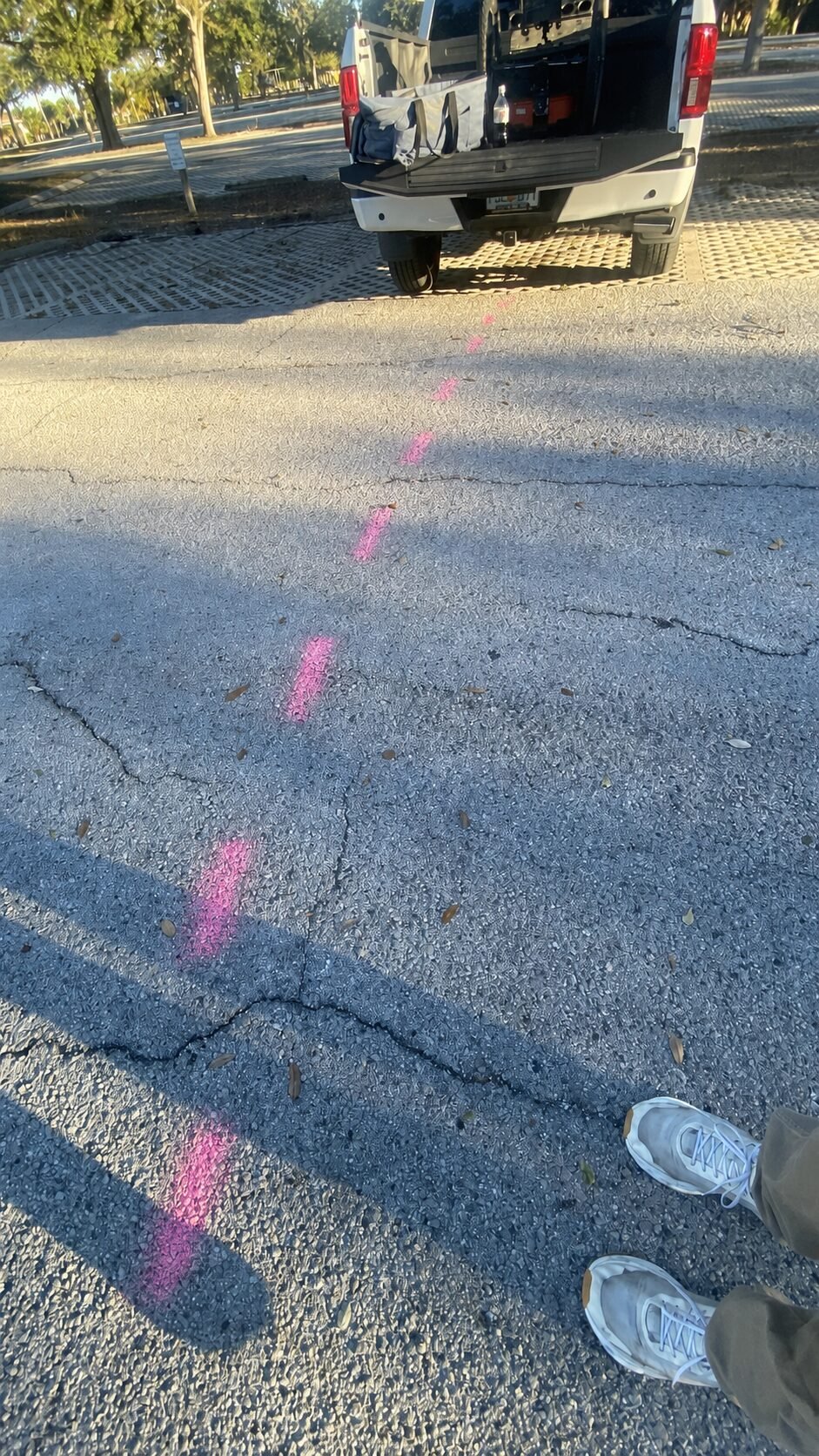
GroundScout is often brought in here through Private Utility Locating Services to help confirm the route of private water lines and identify nearby utilities before cutting or trenching.
If it’s a multi-tenant or large commercial property
Start with your facility manager or property management team, then bring in a commercial plumbing contractor. Large sites can have multiple water feeds, irrigation systems, fire lines, and legacy infrastructure. Identifying which line is leaking—and where it runs—can be half the battle.
When site history is unclear, Utility Mapping (PDF/GIS) can be a smart add so you’re not re-discovering the same infrastructure on the next repair.
What to do immediately while you’re making calls
If you suspect an active leak, reduce damage first. If it’s safe, shut off water at the main valve (or isolate the building) to stop continuous flow. Document what you’re seeing—photos of wet spots, pooling, pavement cracking, meter readings—so contractors have context. If there’s visible sinkhole risk, pavement collapse, or water undermining a slab, keep people and vehicles away and treat it as a safety hazard.
If you’re on a commercial site, loop in the right stakeholders early: maintenance, property management, and any contractors working nearby. Utility work gets complicated when everyone finds out at different times.
Why locating matters before repairs
Repair crews can’t fix what they can’t find. If the line alignment is uncertain—or if the suspected leak zone is near other utilities—locating reduces risk and helps the repair plan move faster.
GroundScout can support leak response by helping identify the likely route of private water services and nearby underground utilities so the repair can be targeted. In some cases, GPR utility locating may be useful when non-conductive lines or complex subsurface conditions are involved. The goal is simple: avoid unnecessary excavation and reduce the chance of striking something that wasn’t part of the original problem.
When this becomes urgent (don’t wait)
Treat it as urgent if you see rapid pooling, sinkhole formation, major pressure loss, water entering a structure, or visible ground movement. Also treat it as urgent if your bill spikes dramatically and you can’t explain why—because constant flow can indicate a leak even when the surface looks normal.
Bottom line
For underground water leaks, the first call is usually your water utility (to confirm public vs private responsibility). If the leak is on the customer-owned side, a licensed plumber or commercial plumbing contractor typically handles diagnosis and repair. When the pipe route is uncertain—or the leak is under pavement, slab, or a busy corridor—bringing in Private Utility Locating Services can make the repair safer, faster, and less destructive. And if you want the fix to stay “fixed” from a planning perspective, Utility Mapping (PDF/GIS) helps ensure the next project doesn’t start from zero.