
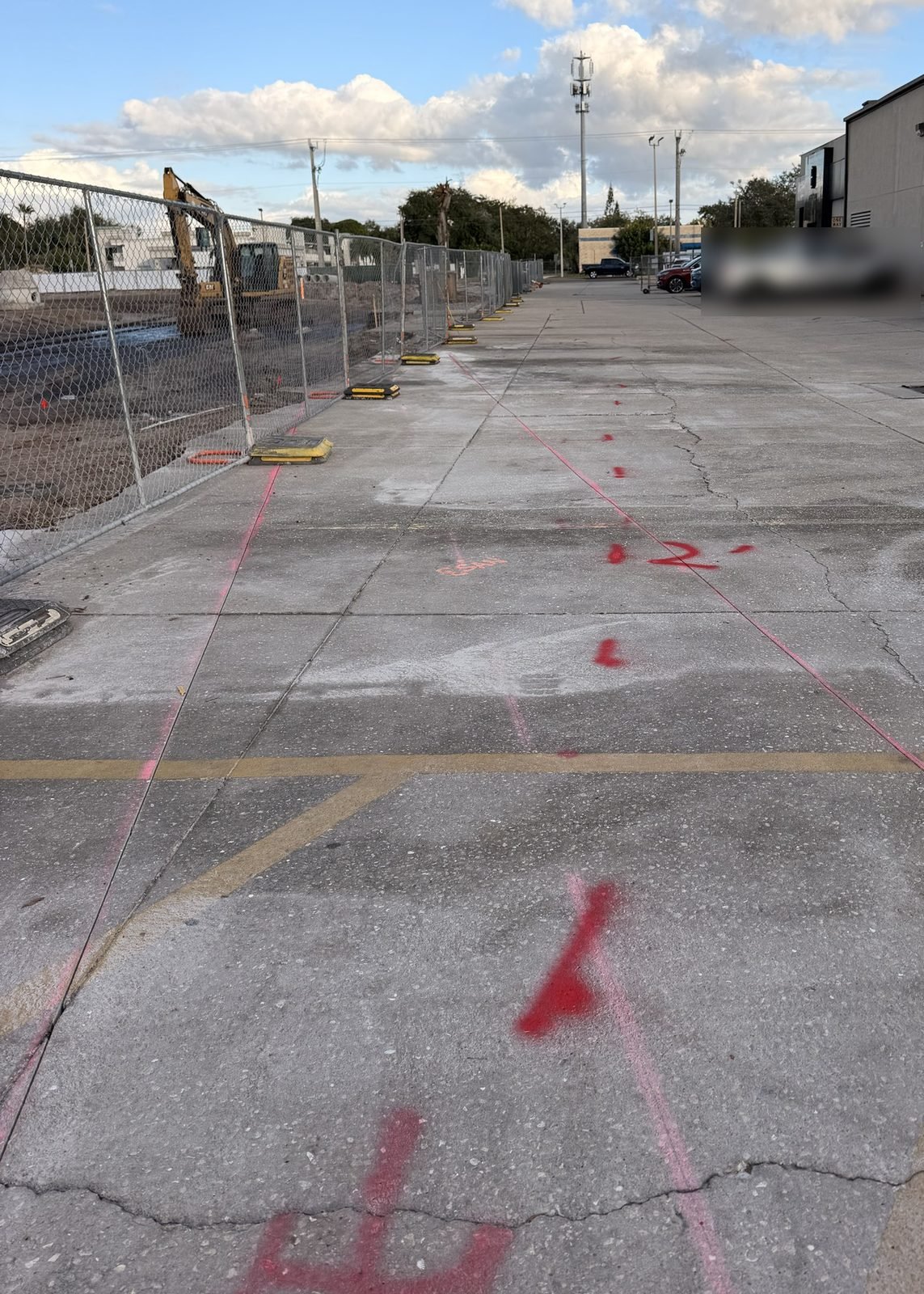
- Private storm lines connect roof drains, inlets and ponds. The owner maintains them.
- Large pipe shows well on radar, and open structures give the route away.
- Green paint marks sewer and drain lines.
What a private storm system includes
- Inlets and catch basins in parking lots
- The pipe that links them
- Buried roof drain leaders along a building
- Yard drains, trench drains and French drains
- Pipe to retention ponds, control structures and outfalls
Most commercial sites and subdivisions in Tampa Bay have a permitted stormwater system. The owner, HOA or community district maintains it. Utilities mark what they own in the street. They do not mark the system on your lot.
How storm pipe is located
Start at the structures
Every inlet and manhole shows where pipes enter and leave. With the lid off, pipe size and depth can be read from the rim.
Radar between structures
Concrete and large plastic pipe make strong radar targets. Passes across the route confirm the line from one structure to the next.
Mark and record
The route goes down in green paint. A field sketch ties each run to the structures it connects.
Storm pipe is not metal, so an electromagnetic locator has nothing to follow. This work leans on radar and on what the structures show.
Why crews hit it
Storm pipe under a parking lot can sit close to the surface. A saw cut for a new island, a bollard footing or a light pole base lands right on it.
Corrugated plastic pipe crushes easily. A crushed storm line may not show up until the next heavy rain, when the lot floods and the pavement starts to settle.
Roof leaders are the other surprise. They hug the building, right where footings and utility trenches go.
Limits
- Small corrugated yard drains in wet soil may not show on radar.
- Ground near a pond is often saturated, which cuts radar depth. The USDA ties that loss to water, clay and salt in the soil.
- A pipe that changes direction with no structure can be missed. Extra passes at likely bends reduce that risk.
Storm drain questions
Does the city or county mark storm drains?
Only what it owns, and only if it has lines in the dig area. The storm system on a private lot is the owner's.
Can you tell me the pipe size and depth?
At an open inlet or manhole, yes. Between structures the route is located and the depth is an estimate.
Do you locate French drains?
Sometimes. A gravel trench with small pipe is a weak radar target. Where it daylights or connects to a structure helps find it.